

Thank you for being here. Please consider supporting my work by sharing my writing with a friend or taking out a paid subscription.

Over the weekend I scrolled past an ad for Meta’s new agentic AI tool Muse that I haven’t been able to shake.
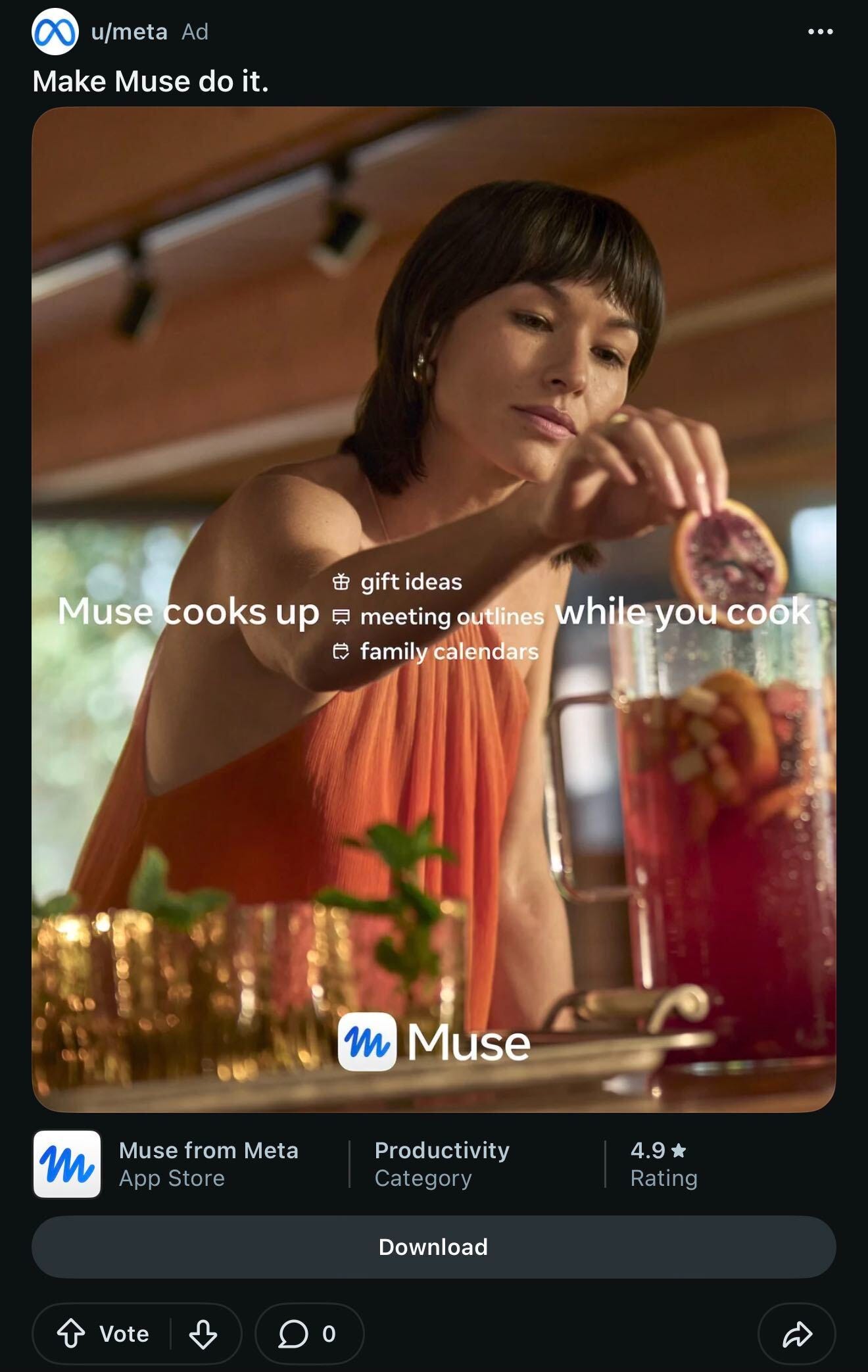
“Make Muse do it,” the ad says. Not ask. Not request. Not suggest. Make.
This suggests that the most troubling aspect of Muse is not the friendly, waving mascot designed to lull you into a false sense of security—surely that cute little guy couldn’t leak all my personal information, right? No, while the potential privacy implications should scare you, the thing that really worries me is the framing of this ad and what it implies for how we are likely to be (de)formed by our interactions with these ever more powerful AI tools.
To be clear, I’m not disturbed because I think that the LLM-powered software tool hiding underneath that anthropomorphised fuzzy little exterior actually has feelings or personhood or consciousness like we do. While I am doing my best to be open-minded about the potential for these machines to have something that at least looks an awful lot like consciousness, I generally find myself nodding along with Microsoft AI chief Mustafa Suleyman when he writes that AIs do not have rights, feelings, or consciousness and that acting as if they do walking on thin ice. Co-teaching a new class this fall focused on explaining how generative AI works has done nothing but further convince me that while these tools are amazing inventions, the kinds of emergent behaviors they exhibit are really just mirages, appearing to be something that they are not as a byproduct of being trained on language.
But even if you’re willing to accept that these AI agents are nothing more than sophisticated computer programs, does that mean I should “make” it do things? Is it even possible to make it do something, at least in the sense that the Muse ad is trying to convince us is possible?
There is at least some sense in which we can make Muse do something. We can make it do something in the same way that I make my bike take me down the road or I make my computer send an email. But this kind of “making” via machine is quite different from what the ad is communicating.
The vibe here is awfully close to Muse as a digital slave, an entity we can compel to do our bidding without all the moral complications. But the moral status of the thing we are treating as our slave is only a part of the story. Even without any moral standing of its own, we can be made—or unmade as the case may be—by the way we interact with tools like Muse.

It makes no difference to Muse whether you make it do something or not, just like it doesn’t matter to Claude or ChatGPT if you pepper your requests with pleases and thank yous. But even though it doesn’t make any difference to Muse, it sure makes a difference to you.
The way that we treat the inanimate the things around us shapes our own character and virtue. Ultimately, this influences the way we act not just toward inanimate things, but toward living, conscious beings as well. As our worlds become increasingly filled with entities that appear animate even if they are not, we will find ourselves at ever greater risk of having our character warped.
It may start with making Muse do it, but it sure doesn’t end there.
Got a thought? Leave a comment below.
Reading Recommendations
Appreciated this reflection on the framing of LLMs as stochastic parrots from Eryk Salvaggio where he unpacks some of the key ideas line by line.

Here again is the link to Microsoft AI chief Mustafa Suleyman’s blog post arguing against the idea that large language models are conscious.

A fascinating read from Elizabeth Dias in the New York Times this week about the discussions that have been happening over the last several months between Anthropic and religious leaders. This follow up note from my Praxis colleague Andy Crouch is also worth reading. In it he expands on his thinking around these models and how we should be interacting with them.
The Book Nook
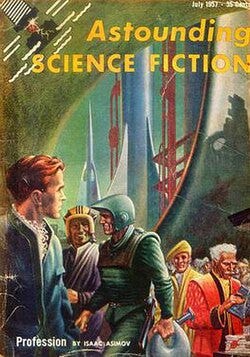
This week I’m in the middle of one of Isaac Asimov’s short story “Profession.” I’ll avoid spoiling it for you, but it has some thought-provoking ideas worth wrestling with in a moment where there is the real temptation to believe that we can simply outsource our knowledge and wisdom. Enjoying it so far.
The Professor Is In

Last week I took the wheel in the new AI-Amplified Prototyping class that I’m co-teaching this semester and we turned to a module on building and deploying apps on the Internet. This week students got a crash course in server, backends, and databases. This week we’ll turn to frontends. If you’re interested in learning more, all the course materials are openly accessible on the course website.
Leisure Line
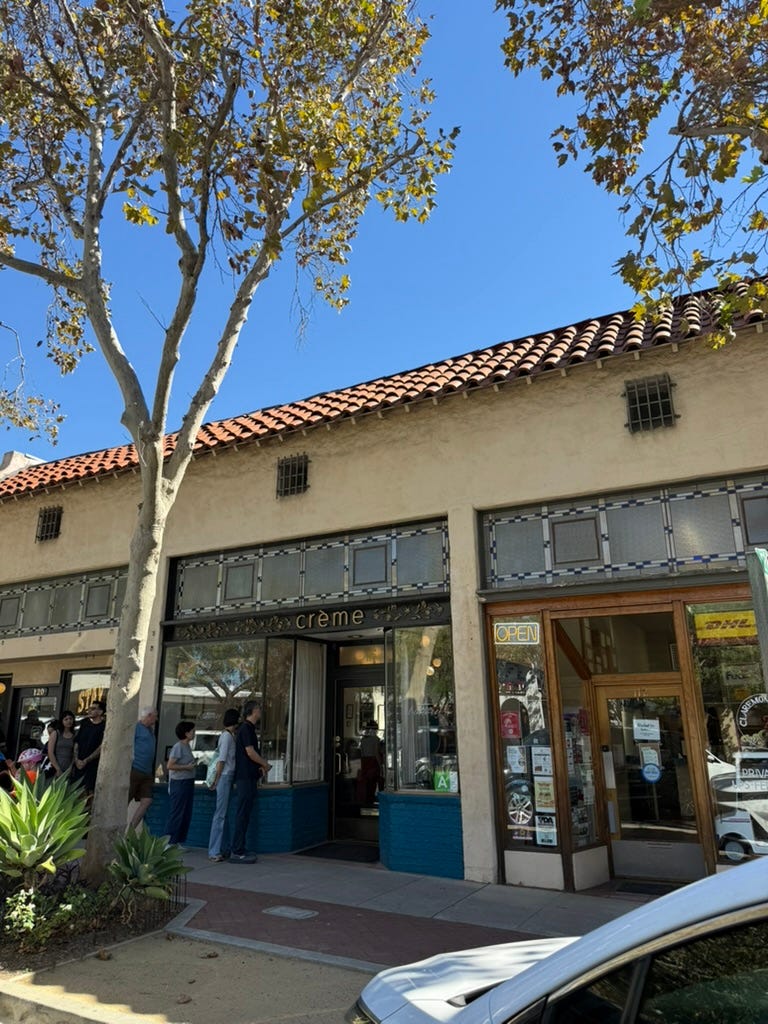
This is a popular view many Saturday mornings after soccer or whatever else we have going on: a visit to the Claremont treasure, Crème. As you can see here, there is almost always a line wrapping down the sidewalk, especially on Saturdays, which is the only day of the week you can get the delectable sugar bun.
Still Life
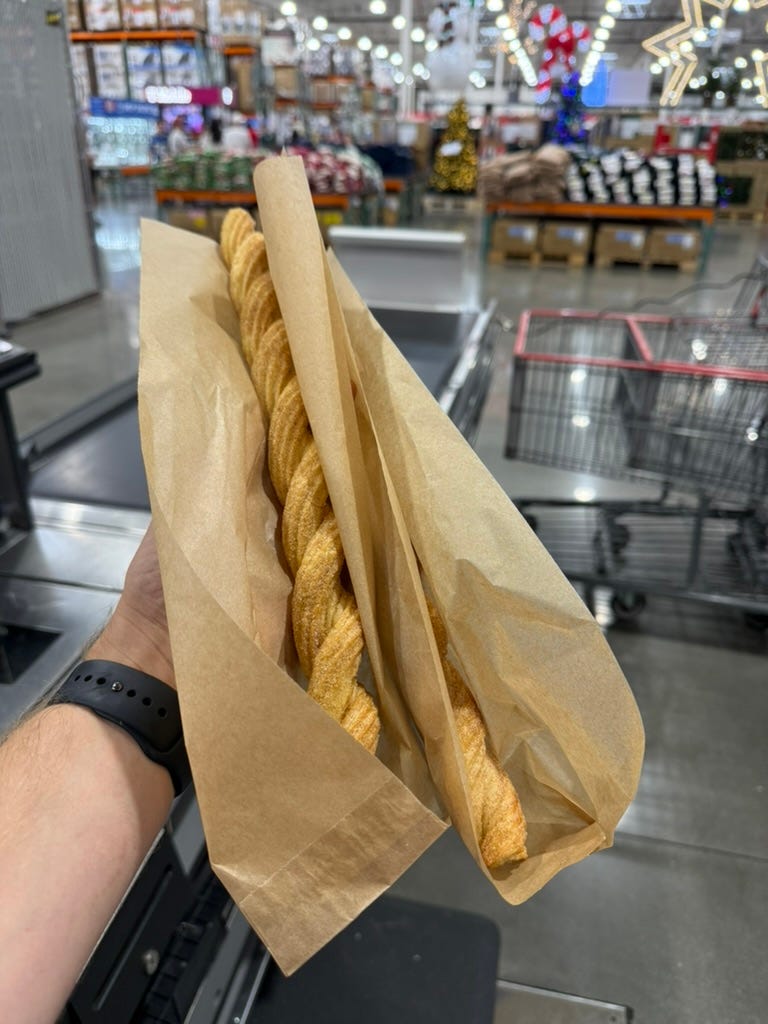
Churros are back at Costco!
Whenever I see those ads that say Muse by Meta what pops into my head is Metamucil