
Now, Not Next
Reflections on avoiding destination sickness


Thank you for being here. Please consider supporting my work by sharing my writing with a friend or taking out a paid subscription.

The happiest place on earth would be even happier if people were actually present while they were there.
Last week we used the last day of the three-day SoCal resident Disneyland passes we get each year. I enjoy Disneyland for all the typical reasons and had grown to enjoy it even more since becoming a dad. The only downgrade is that now I’m on the hook for the bill. The magic of Disney from the movies to the parks has always been their way of making it connect for both kids and adults. Disney movies reveal themselves in new ways when you watch them as an adult and the parks change too when you see them through the eyes of your kids.
But in addition to the rides and food and characters and parades, I always enjoy Disneyland for another reason: the people watching. On a Disney day you spend plenty of time standing around and waiting. This provides ample opportunity to observe the people around you. One thing you’ll notice before too long: everyone is already thinking about the next thing.
The most striking example of this I saw last week was sitting in It’s a Small World, watching someone a few rows ahead of me scrolling the list of wait times for Lightning Lane openings at other rides. I suppose that perhaps they didn’t really care to be on Small World, but it seems like a certain pathology that is quite common in our modern culture. We’re always so obsessed with “the next thing” that we fail to enjoy the here and now.
This is not just a Disneyland problem. While it might not be quite as obvious in the moment, college campuses are another place where eyes are commonly focusing on the next thing instead of the now. Students enter college already worrying about where they’ll land after it is all done. Even if they’re not worried right away about life after college, they’re worried about next semester’s classes and next summer’s internship. This is a significant loss. This pathology of always looking at the next thing means you often miss the joy of the current moment.
Destination sickness and how to address it
I got some new language for this while listening to a podcast interview last week with Dave Evans about his new book, How to Live a Meaningful Life. In this particular interview, Dave added a new phrase to my lexicon: destination sickness. Near the end of the episode, he talks about an interaction he had with an ICU nurse at Stanford in his twenties. As he was talking to her about his struggle to figure out “the next thing,” she explained something that seems to have had a big impact on Dave. Here’s the way that Dave put it.
She goes, oh yeah, you know, here in the ICU, particularly at Stanford, we have all these highly accomplished people. And it was always, you know, when I finished the degree and then want to get the grad degree and then I want to get the good job and then I make partner and then I make my first million. And it’s always that next thing will make me happy. And she said, and some of the people here, like the ones in their mid 50s, who burned their heart out and now they’re actually gonna die. There’s nothing more we can do for them. They suddenly realize there is no next thing. And then they look back at all the things they ran through and they realized they missed the whole thing. And frankly, she said, and most of them die in despair and realize it’s too late. I mean, I shuddered at the time. I said, oh my god, she goes, oh yeah, it’s really rough. By the way, here’s a tip. Don’t do that.
“And they look back at all the things they ran through and they realized they missed the whole thing.” If this doesn’t stop you in your tracks today, it should. It stopped me in mine.
Don’t take today for granted. Not only don’t take it for granted, but do whatever you can to be present in the moment today. If you’re at Disney, don’t get so caught up in planning out the perfect ride and lining up the most optimal lightning lane strategy that you miss out on the experiences right in front of you. If you’re in college, don’t spend all your time wishing for the next thing—obsessing over where you will be after graduation. Just be present in the moment and realize that it’s not about next, it’s about now.
The antidote to destination sickness is not complicated, but that doesn’t mean it’s easy. It is especially hard in our modern moment when we are acutely feeling not only the pressure of the next thing but have a wider view than ever into the next things of the other people around us.
Fortunately Dave doesn’t leave us just with a diagnosis but suggests some practices that might help us to avoid the sickness altogether. Here are three:
A reframe, from “got to” to “get to.” It’s the idea that realizing that many of the things we get to do during our days are a great pleasure if only we place them in the proper context. Don’t spend so much time thinking about the next class that you glaze over the class you’re currently in. Don’t obsess over the life you want after college and miss the enjoyment of the life you’re living in college.
Do the best you can, but realize that doing your best doesn’t mean it’s going to work. There are plenty of things in life where despite your most valiant efforts, things won’t turn out the way you hoped due to no fault of your own. Just because you put in the effort to study for the test doesn’t guarantee that you’ll ace it. Just because you keep trying to hone your writing skills doesn’t mean that you’ll write a banger essay every time. Do the best you can with the time and resources you have and don’t get too caught up in the results.
“Be here now.” Riffing on Ram Dass’ mantra, Dave reminds us that there is nowhere else to be but here. As much as you may be looking forward to the next class, job, or break, there’s no way to skip ahead. How much better to be present in each moment and look for what it has to offer.

It’s almost always easier to identify destination sickness in others than it is to notice it in our own lives. This sickness has a sneaky way of disguising itself as prudence and an attempt to be wise about the future, but more often than not it is rooted in discontentment. There is always something more to want and something to be dissatisfied with in our current situation. We want to have more authority and influence at work, to make more money, to have nicer things, to feel more settled—I’m sure you get the picture. If I’m being honest with myself, I see this more often in myself than I’d like.
As my sabbatical begins to come to a close at the end of the summer, I’m thinking about how to frame it in this light. To see the opportunities ahead of me with gratitude in the framing of things that I have the privilege of doing. To think more deeply about how I can take responsibility for the things within my control and do them to the best of my ability. And more than anything else, to be here now.
Got a thought? Leave a comment below.
Reading Recommendations
A provocative take from a conversation between Jay Caspian Kang and Hollis Robbins in the New Yorker under the headline “Why the Future of College Could Look Like OnlyFans.” It’s an interesting framing and worth considering if you are thinking about the dynamics of how AI will impact the landscape of higher ed.
A thoughtful piece from Marc Watkins on the impact of a tool which promises to label text as generated by AI or written by a human. Looking forward to seeing Marc in person next week at our conference at Mudd!
The allure of having your social media feed suddenly be curated so that you can pick and choose what accounts you follow to live in a space free of AI slop might be the most attractive marketing pitch I’ve yet seen for a company marketing AI detection. But like many AI claims, the results are often more complicated than the sales pitch and don’t match the marketing. The impact this has on my online interactions isn’t worth it to me. I likewise think the potential harms to an account holder are far more dangerous than having AI-generated material within your feed. There is the potential for people to have their audience assume that the messages they write are not authentic, or deceptive—all based on a label that may not be accurate.
The Book Nook

I’ve shared Dave and Bill Burnett’s most recent book, How to Live a Meaningful Life, before. If you enjoyed reading about Dave’s perspective in this interview, I think you’ll enjoy the book.
The Professor Is In


Presentation Days at Harvey Mudd are always fun. I especially enjoyed getting to see the students from Mudd’s growing FSAE club, Harvey Mudd Racing, and the students from my IPAI lab present their work from this semester.
Leisure Line
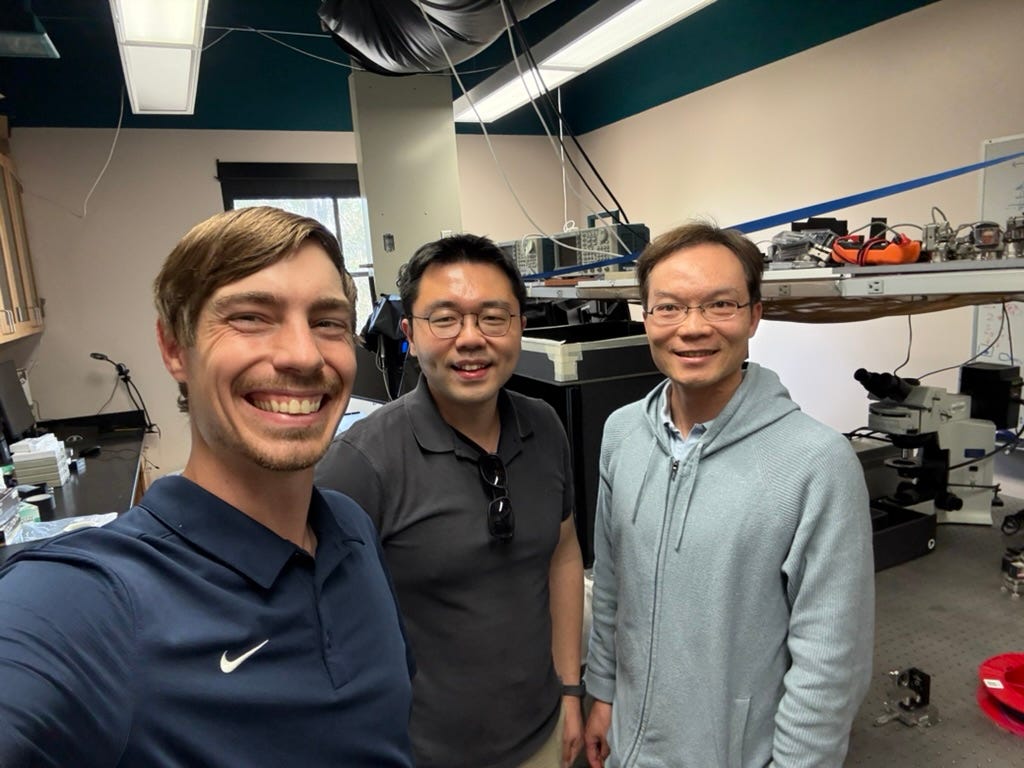
I had a great time seeing old friends this last weekend at Caltech as we celebrated my PhD advisor and wished him well as he moves his lab to Singapore later this year. It was particularly great to see Mooseok and Haowen again and to reminisce on all the wonderful times we had working together during my time at Caltech.
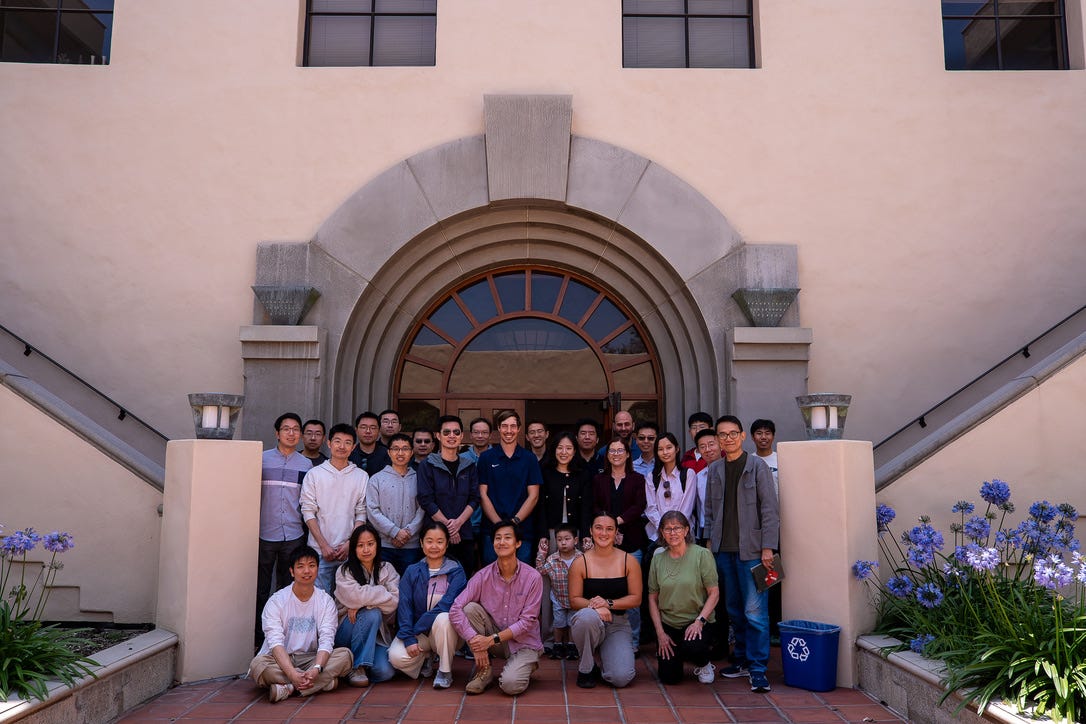
Still Life
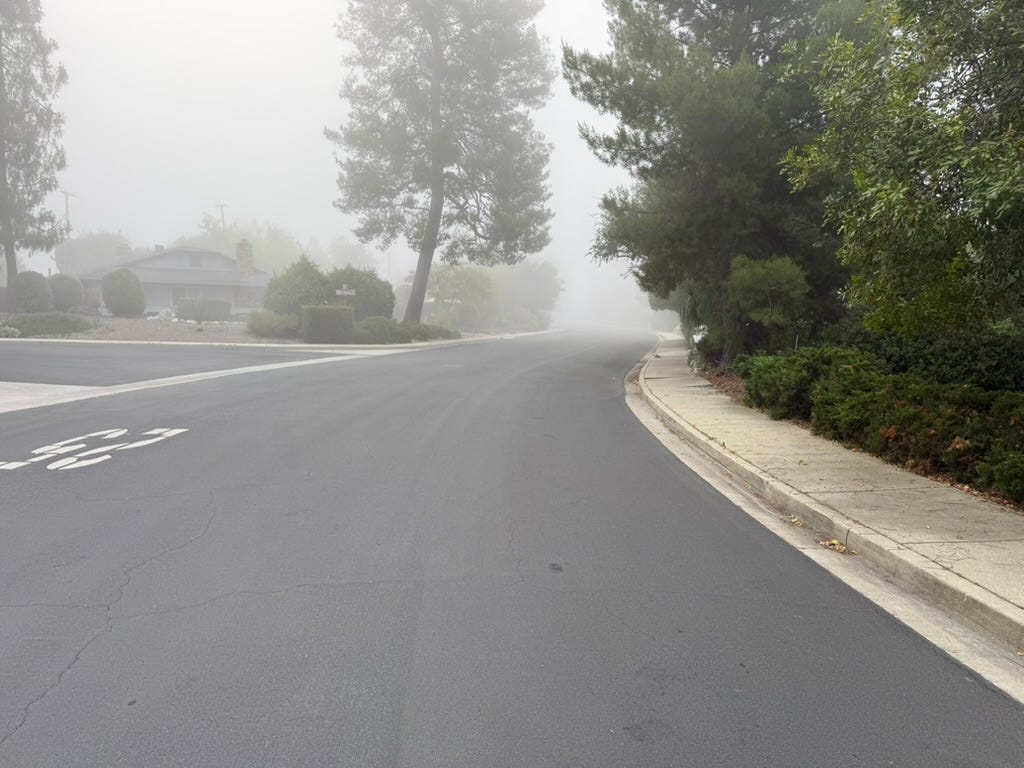
A shot of a foggy Claremont morning on one of my walks.
YEEEEEEEEES! Thank you for this piece, Josh. God has reminded me of this over and over and more and more in recent years. Every moment, every day is a gift, and we are not promised the next one. What I learn about others, about myself, about life, about beauty, about God can be astonishing if I just "be present" and focus on where I am. It's a "power of presence" that profoundly impacts my relationship with God and others.
It's a habit that has to be practiced through prayer, patience, and purpose. I remind myself every day that I'm here for a reason and a purpose. The way to know the Why is to understand the Who of myself and others in the midst of the Where (here and now).
So inspiring that I wrote my own note in response: https://substack.com/@sparky6/note/c-259060400?r=rvvvg